
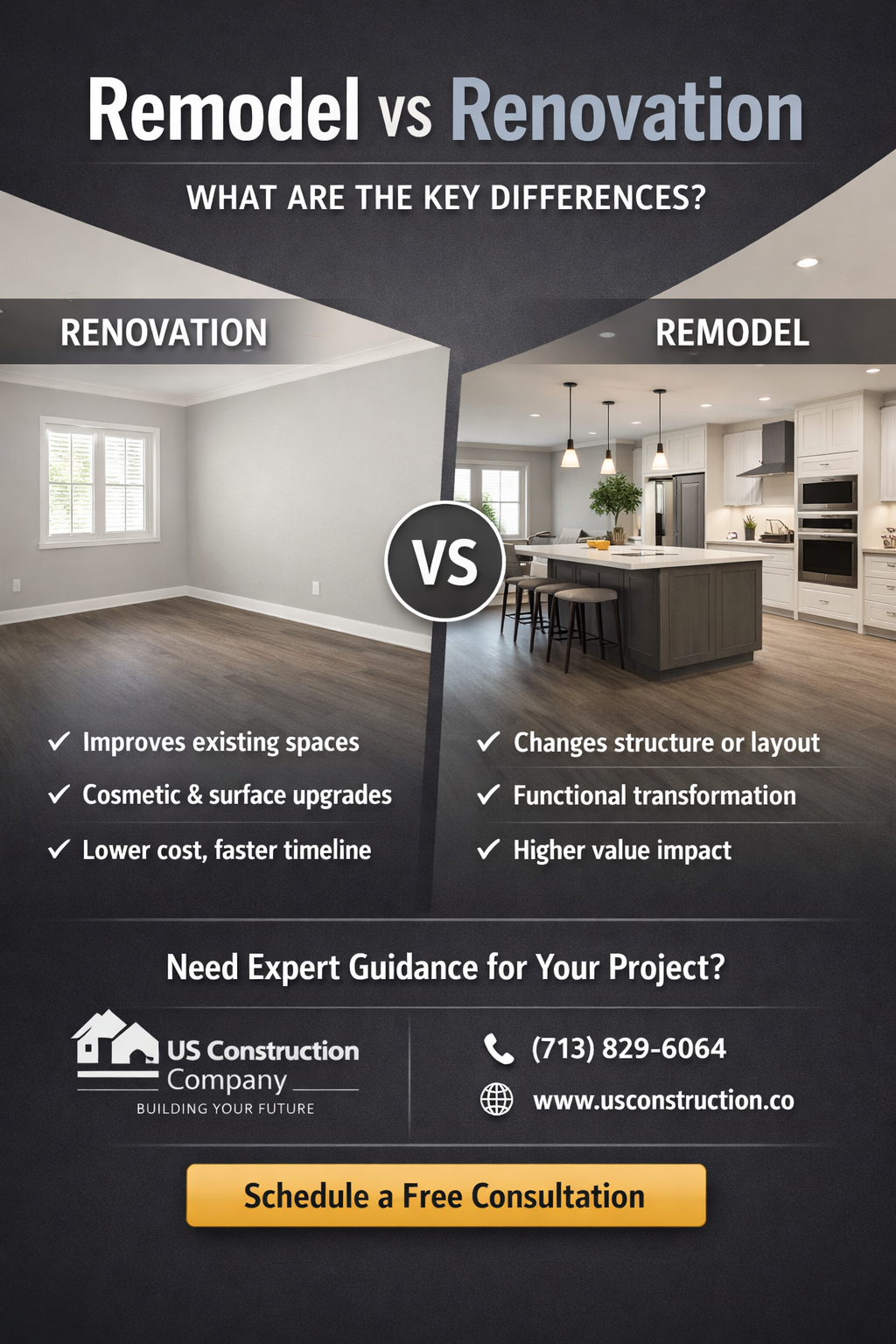
When upgrading your residential or commercial construction, two things come to mind: remodeling or renovation. Now you should understand which one is best for you. To dispel your myth, we explain the key differences between remodels and renovations. These two concepts overlap. Remodeling is the big canvas that involves major structural work, while renovations could be a part of it.
The basic purpose of renovation and remodeling is to improve the aesthetics and functionality of the existing structures. US Construction Company is a Houston-based general contractor able to deliver safe and reliable upgrades of homes or workspaces. Join us to understand which approach is best for your project.
What Is Renovation?
Renovation is the process of upgrading a space without making significant structural alterations. Renovation aims to improve the home’s overall appeal and give your room a modern, fresh look.
Renovations are typically speedier and less expensive, but the scope will determine how much they cost and how long they take. The cost of a slight makeover is obviously less than that of a high-end renovation.
What Is Remodeling?
When you make structural changes to a construction, such as modifying its design features to improve its functionality and appearance, it is considered remodeling. This process not only upgrades but also transforms the whole layout.
Remodeling is an option for people who want to change their house to suit their daily routine or commercial needs. However, before beginning rebuilding work, remodeling requires thorough planning and obtaining the necessary permissions.
Differences Between Remodeling and Renovation
Indeed, these two processes look similar, but the variations begin with the unique goals, scopes, expenses, and results that underlie their selection. Houston general contractors can streamline the processes to make it long-lasting for future needs. You must understand the distinctions to plan projects properly, allocate funds, and achieve the intended outcomes.
-
Definition and Objective
Renovation is the process of reconstructing, modernizing, or enhancing an existing space to improve its strength, utility, or aesthetics. The main objective is to revitalize the area without drastically changing its design. For instance, restoration projects include replacing damaged flooring, repairing walls, and updating kitchen cabinetry.
Remodeling is the process of modifying a building’s layout, framework, or design. It transforms the area into something new, going beyond aesthetic upgrades. Remodeling projects include things like enlarging a bathroom, creating an open-plan kitchen, and turning a garage into your own private office.
-
Scope of Work
Renovation covers cosmetic improvements, such as wallpapering, floor resurfacing, and fixture replacement.
- Functional repairs: resolving structural, electrical, or plumbing problems.
- Small upgrades: adding new cabinets, modern window installation, or contemporary lighting.
Renovation focuses on enhancement rather than total change, working within the current architecture and layout.
Remodeling involves structural modifications, such as removing walls, adding extra rooms, and rearranging floor layouts.
- Functional modifications, such as turning a rooftop into a bedroom or a basement into an entertainment area.
- Design overhaul: adding new design elements, fixtures, or patterns that alter how the area is utilized.
Compared to renovation, remodeling usually requires a broader scope and more substantial building work.
-
Purpose and Benefits
Renovation updates obsolete amenities and enhances aesthetics. It can address safety concerns or fix wear and tear. Also, improves convenience and appearance while preserving the existing functionality.
Remodeling can improve functionality by giving the previous structure a new layout. It can increase functionality, accessibility, or the value of square footage. Frequently, a calculated investment to optimize possibilities for resale.
-
Cost and Timeline
Remodeling usually involves a short timeframe and investment. As there is no structural change, the expenses are controlled. It is perfect for businesses or households looking for rapid upgrades without significant alterations.
Due to structural alterations, new system installation, and design revisions, remodeling is typically more expensive and time-consuming. It needs thorough planning, licenses, and an expert Houston construction company.
How to Choose the Right Approach for Your Property
Before making a decision, the experts evaluate the construction and its design features. Remodeling completely changes the looks and functionality, whereas renovations refresh the existing structures. Each concept needs strategic planning and professional execution. Here, we explain some key points that help the property owner to take suitable action.
Assess the Condition of Your Property
Structural conditions and strengths are essential for achieving optimal solutions.
- Unfinished or bare spaces: If your property has minimal finishes and architectural features. A completed interior remodel might be the best option for creating a fully functional and personalized space.
- Outdated interiors: Renovation is a viable approach to updating and modernizing houses or businesses that exhibit deterioration, damage, or out-of-date designs without requiring significant structural adjustments.
- Functional limitations: Remodeling can reorganize the area to enhance convenience, usefulness, and efficiency if the current arrangement doesn’t suit your lifestyle or functional requirements.
Define Your Project Goals
The main goal for home or workspace improvements determines the approach to reconstruction or modification. First, analyze your needs to decide which upgrades add value.
- Cosmetic Enhancements: Renovation can be adequate if updating finishing and visual appeal are your top priorities.
- Operational Efficiency: Remodeling or build-outs offer greater customization for families or enterprises that require new arrangements.
- Optimizing Property Value: The best return on investment (ROI) can be achieved by combining planned remodeling with build-out.
Consider Budget and Timeline
The major drivers of construction upgrades are operational time and the allocated budget.
- Renovation: Usually quicker and less expensive, perfect for little adjustments or short-term enhancements.
- Remodeling: Due to structural and architectural changes, remodeling is more involved, costly, and time-consuming.
- Interior Build-Out: Commonly, the most difficult and expensive, but essential when beginning with an incomplete area.
Evaluate Regulatory Requirements
In Houston, building permits and inspections are necessary for remodeling and build-outs. For major renovations, which include structural alterations, a permit is required. Moreover, to avoid delays or legal issues, ensure your strategy complies with the regional building regulations.
Consult Professionals Early
Finding the best strategy is supported by collaborating with seasoned contractors. They can help you with licensing, planning, and execution, and provide accurate cost projections and feasibility assessments. Early expert assistance ensures the project is carried out correctly, safely, and economically while optimizing the property’s long-term value.
The state of your property, project objectives, financial constraints, and legal restrictions all play a role in selecting the best strategy. Remodeling is preferred for practical changes, renovation is better for upgrades, and interior build-outs are best for constructing unique spaces from the ground up.
Find Remodeling Experts Near Me
US Construction Company offers reliable services for residential or commercial construction and renovations. Contact us to upgrade your assets aligned with your lifestyle and boost their resale value.
FAQs
Q1. Are city municipal approvals necessary for remodeling and renovation projects?
The nature of the work determines the permit requirements. Permits are usually needed for remodeling projects that involve structural alterations, electrical, plumbing, or HVAC adjustments. However, renovations for minor changes and cosmetic improvements don’t require permits.
Q2. Can a renovation be converted to remodeling during project execution?
Indeed. Many projects start as renovations but soon turn into remodeling. During the necessary demotion and inspections, the experts found hidden damage to structural parts. Early planning and expert evaluation are crucial because this change may have a considerable impact on budget, schedule, and permit specifications.
Q3. Which approach is safer and causes minimal disruption?
Renovation concentrates on exterior upgrades and repairs; it typically causes less interruption. Remodeling creates considerable disturbance because it involves structural alterations, destruction, or system improvements.
Q4. Do renovation and remodeling projects come under insurance coverage?
Insurance coverage specifications vary with the nature and scale of the project. Renovations come under general homeowner or commercial policies. On the other hand, remodeling requires a contractor’s risk insurance.
Leave A Comment