
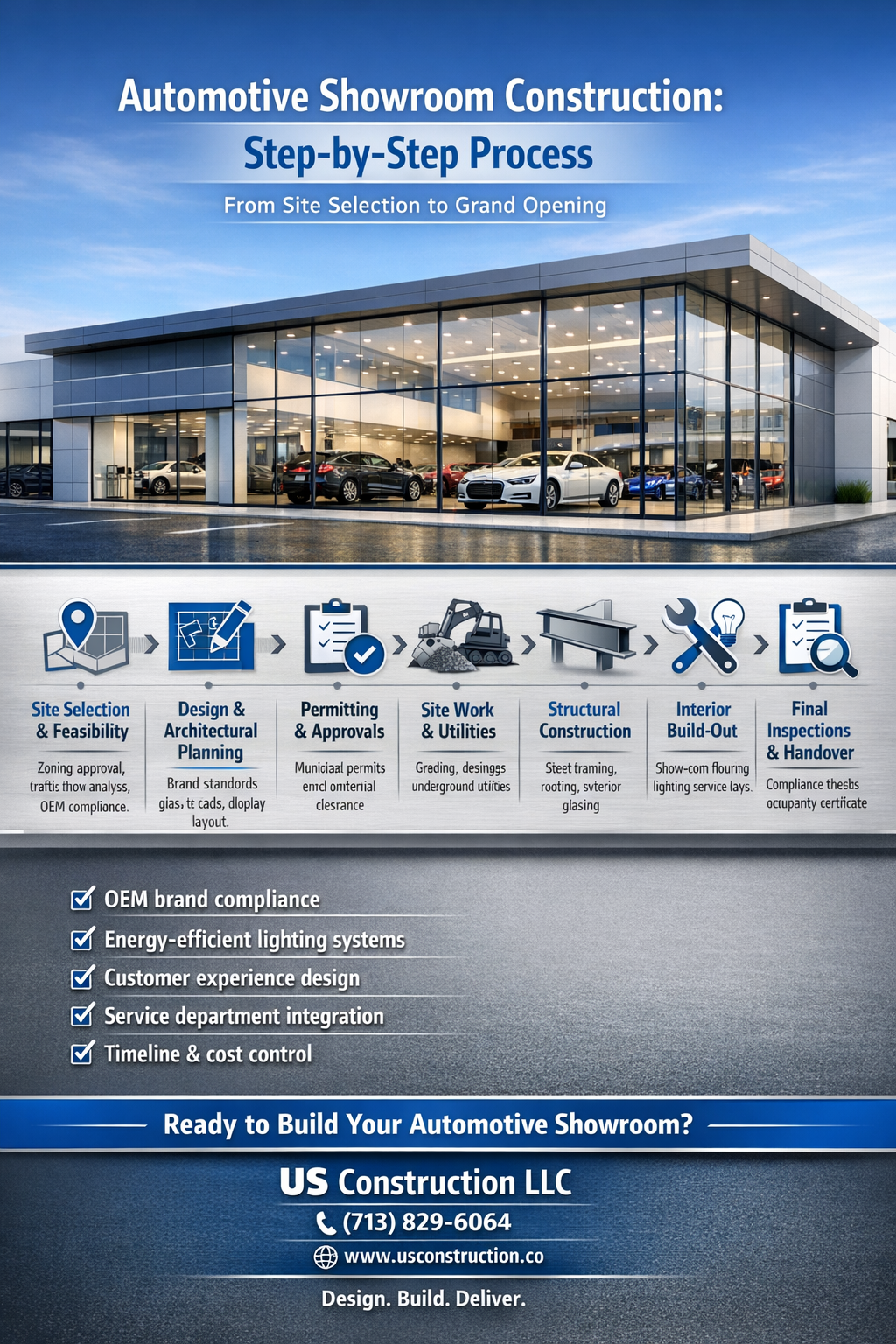
Automotive showroom construction requires unique branding architectures and operational efficiency. It is a highly specialized form of commercial development that includes a sales center, service facility, and secure inventory storage yard. For a better understanding of what steps are involved in automotive showroom construction.
US Construction LLC, an experienced commercial contractor in Houston, Texas, offers a complete range of retail and marketing constructions. We integrate high-ceiling showrooms, reinforced flooring, advanced HVAC, and a legally compliant parking area. A dealership-oriented building should be comfortable for customers and withstand heavy-duty operations.
Stages of Construction Involved in an Automotive Showroom
It involves a multiphase commercial construction process that blends retail facilities, industrial-grade durability, and strict code compliance. Only experienced commercial developers in Houston, Texas, can meet the customer expectations and branding requirements.
Feasibility and Pre-Development Planning
In this phase, builders conduct feasibility studies to assess the project’s financial and logistical viability. They perform:
- Market analysis and cost estimations
- Select land with effective traffic flow
- Understand zoning restrictions and land-use approvals
- OEM (manufacturer) suggested layout
At this stage, owners and developers collaborate to outline their expectations and feasibility checks. They decide the roadmap for project scope and capital investment.
Conceptual Design and OEM Approval
Automotive dealerships are built in line with regulatory standards and business branding features in a balanced way. The architects and designers finalize:
- Concept drawings
- Site layout planning
- Manufacturer suggested façade and branding elements
- Structural and MEP (mechanical, electrical, plumbing) specifications
- Final design submission and approval
Original Equipment Manufacturers are the main contributors to finalizing design factors to proceed further. Any deviation from brand standards leads to repeated design changes and project delay.
Detailed Engineering and Construction Documentation
This stage transforms initial designs into a build-ready drawing. The flooring material, ceiling height, and ventilation systems should follow the franchise prototype’s standard format. Contractors record documents for:
- Wide-span showroom section
- Reinforced concrete and flooring pattern
- Systematic circulation system for service bay
- High-capacity electrical layouts that can support elevators and EV charging
- Drainage system planning
Nowadays, commercial builders emphasize value-engineering alternatives to maintain cost control without compromising structural integrity.
Permitting and Regulatory Approvals
Automotive facility development is a complicated process. The developers have to follow:
- Local building permits
- Environmental standards
- Utility connection approvals
- Fire safety measures
- Branding signages
In car showrooms, the risk of contaminating water resources is high. Contractors permit their oil-water separator systems and hazardous-material storage tanks. These approvals take longer than for standard retail projects.
Site Preparation and Civil Works
Land clearance and earthwork outline according to the vertical construction load. Automotive showrooms must withstand heavy vehicle traffic and require precise site preparation.
- Extensive excavations and soil stabilization
- Underground utilities and drainage installation
- Effective compaction and foundation pouring
The outdoor inventory display and parking areas need proper clearances along the perimeter of the land.
Structural Construction
In the vertical development phase, steel framing, roofing, and exterior envelope of the building are completed. Automotive showrooms feature large glass façades and a column-free layout to minimize distractions to vehicular mobility.
Building Systems Installation (MEP Phase)
Specialized HVAC and ventilation systems are installed with advanced mechanical systems. In the service area advance circulation and electrical panels are used for showroom comfort. A separate plumbing and oil systems are integrated. For secure operational efficiency and safety compliance, reliable fire suppression systems are installed.
Interior Build-Out
The dealership’s final construction shape includes the office, showroom, flooring, and lighting.
- Sales offices finishing
- Customer waiting areas and reception desks
- Display section of parts with proper shelving systems
- Branding signals
High-end finishes are used for business credibility and customer trust. Contactors purchase materials and fixtures in bulk to reduce the impact of market fluctuations.
Equipment Installation and Technology Integration
To support automotive showroom development in Houston, Texas, specialized equipment and technologies are used.
- Heavy-duty lifts to move vehicles
- Diagnostic, washer, and service equipment
- Digital displays for advertisement
- Security and surveillance systems
- High-speed internet cabling and infrastructure
Now, the automobile companies are introducing Electric Vehicles, and the showrooms need approved electrical charging systems.
Final Inspections and Operational Launch
Houston commercial construction companies complete their inspection and third-party audit reports before handing over the showroom. They clear OEM brand compliance verification, life-safety approvals, system testing, and punch list corrections.
How Long Does It Take to Build an Automotive Showroom?
Constructing an automotive showroom is a complicated commercial project. From initial design to final opening, it takes 15 to 28 months. The average timeframe varies with project scope, manufacturer branding demands, permitting process, and materials availability.
| 1. Pre-Construction Phase | (3–6 Months) |
| This initial phase emphasizes feasibility checks and groundwork.
Includes:
Delays at this stage often come from land commercial approvals and financing documentation. |
|
| 2. Design and Approvals | (4–8 Months) |
| This stage is time-sensitive and needs effective collaboration between the customer and the construction team.
Includes:
OEM Approval Time |
|
| 3. Construction Phase | (8–14 Months) |
| Once permits are obtained, contractors start vertical development.
Major Milestones:
|
|
Variables that Impact Automotive Showroom Construction Timeline
Even with proper planning, several factors can affect delivery:
- OEM Approval Delays
The manufacturer’s designs are formal and standard, requiring repeated changes to suit different project sites. Sometimes the zoning laws restrict the façade or signage heights and need to be revised. Contractors take time to upgrade previous layouts to meet current legal codes, such as EV charging mandates.
- Supply Chain Disruptions
Automotive showrooms install specialized materials and equipment, which often have long lead times and are subject to supply chain fluctuations. It includes a branded façade, vehicle lifts, steel frames, and glass curtains. Early procurement planning secures the developers from extended manufacturing and shipping timelines.
- Permitting Delays
Dealership projects involve multiple permits and approvals. Contractors’ complete documentation to clear the oil-water separator, hazardous material storage, drainage, and parking lots compliance. The authorities take considerable time in reviews, which can delay the project timelines.
- Utility and Infrastructure Delays
Dealerships’ showrooms involve significant electrical and mechanical capacity. The developers find it difficult to upgrade the existing transformer. Utility providers’ delays in approving power connections. Sometimes they need to replace infrastructure that is unexpectedly damaged.
Cost Breakdown of Automotive Showroom Construction
Automotive showroom development is a high-end project that requires considerable capital investment. It is a mixed-use commercial construction that needs branding like a retail store and industrial-grade structural durability.
| Average Cost Per Square Foot | |
| Standard Dealership | $250 – $350 per sq. ft. |
| Luxury Brand Showroom | $350 – $500+ per sq. ft. |
| Large Metro Markets | exceed $550 per sq. ft. |
Major Cost Drivers of Construction
These facilities have unique branding features with a high upfront cost. Here, we discuss some common factors that increase automotive showroom construction costs.
- Glass Façade Systems (10–18%)
Dealerships of heavy automobiles install large glass curtain walls to maximize vehicle visibility. The cost of high-performance glazing systems increases project cost and labor expenses.
- Structural Steel (12–20%)
The wide-span service area and column-free display section require high-strength steel framing to minimize distractions and maintain an open view. Steel prices are continuously increasing, placing a burden on the budget.
- Service Equipment (15–25%)
For inventory and storage yard management, vehicle lifts and compressed air systems are integrated, which require high labor and material costs. Moreover, special oil-water separators and hazardous waste storage tanks elevate construction costs. A high-specification mechanical installation that can deliver industrial-grade ambience-controlling features adds to the investment.
- Site Development (15–30%)
Extensive land excavation, grading, and stabilization are required to withstand heavy vehicle loads, which increases overall costs. Automotive showrooms are large-scale commercial developments that require large-scale utility connections, drainage systems, and parking lot development.
- Branded Architectural Elements (8–15%)
OEM standards include customized façade, reception areas, specific interior finishes, and signature lighting systems. The premium quality finishes elevate per-square-foot costs. Moreover, large-scale parking lots need accreditation with strict zoning laws.
Houston Commercial Contractor Near Me
Developing an automotive showroom is a capital-intensive operational platform for effective branding and code compliance. Houston commercial contractors conduct comprehensive feasibility checks and site work for industrial-grade durability.
US Construction LLC expertly plans projects that meet customer expectations and regulatory compliance. Contact us if you need to develop a ground-up facility, expand your service area, or modernize your technologies to meet current demands.
FAQs
Q 1. What are the primary features of an automotive facility build?
A comprehensive automotive showroom structure includes:
- Sales office and service are
- Showroom with brand elements
- Customer awaiting and reception
- Storage yard and parking area
Q. 2 Are manufacturers’ branding standards costly?
Yes. Major automotive manufacturers specify unique showroom exteriors and strict corporate identity (CI) programs. For example, Toyota Motor Corporation, Ford Motor Company, and BMW Group are involved:
- Special façade materials and design
- Standard interior layout
- Signage specifications
Q 3. What permits are required for a car dealership showroom construction?
Contactors clear the multiple approvals from local municipalities include:
- Land-use and zoning clearance
- Site development approvals
- Building codes (structural, MEP)
- Stormwater and drainage certificates
- Environmental compliance
- Fire marshal approval
- Certificate of Occupancy (CO)
Leave A Comment