
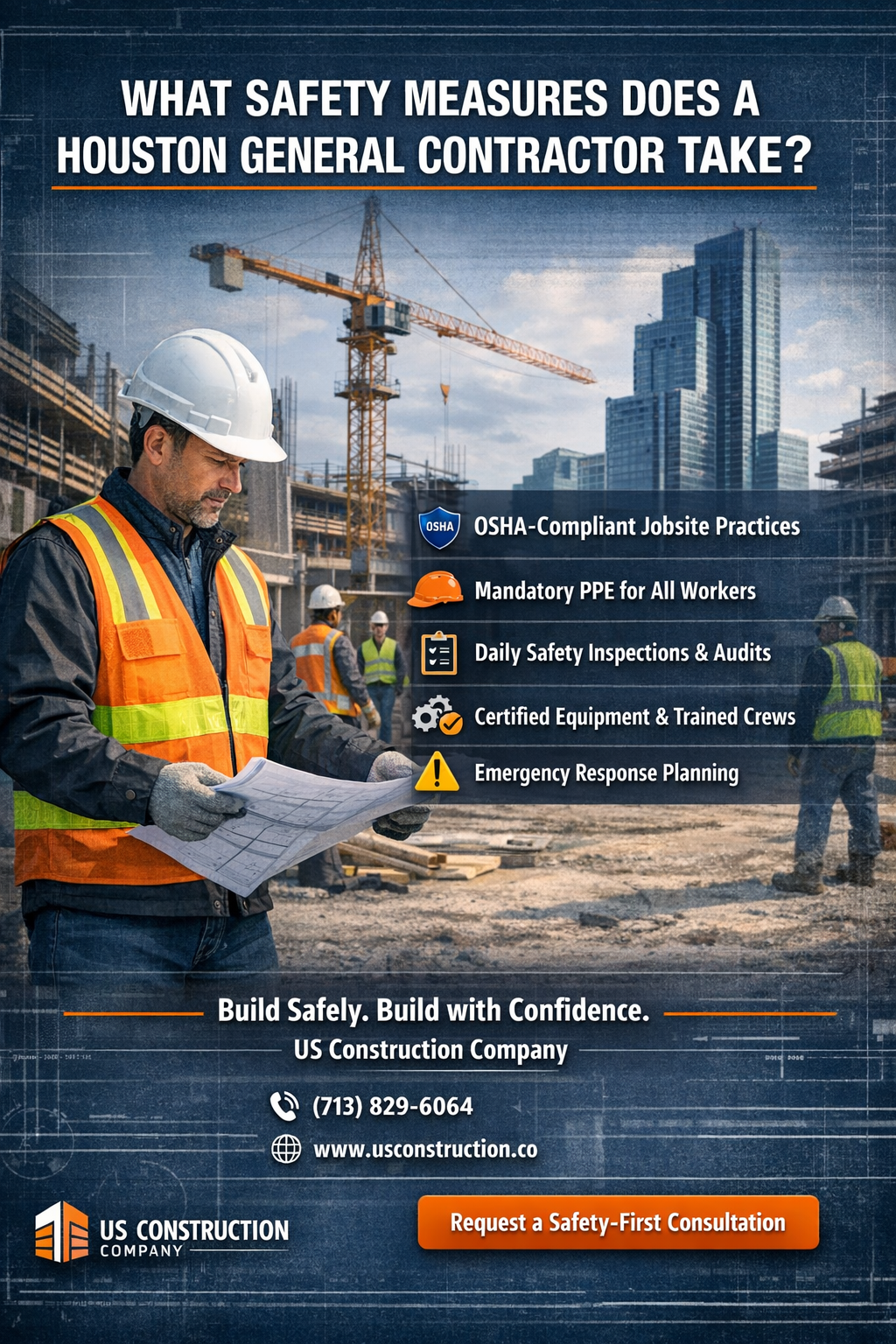
After land clearance and foundation laying, the construction site becomes much more challenging to handle various activities and operations safely. It is the world’s most hazardous industry, with one in five work-related fatalities. Join us to learn what safety measures a Houston general contractor takes to keep the job site secure.
US Construction Company does not just focus on quality work; they also undertake necessary planning and management to mitigate risks to workers and the surroundings. Experts follow some preventive measures, keep strict access controls, and continuously train staff to reduce accidents.
Common Safety Challenges General Contractors Face
Safety concerns on construction sites are difficult to manage, even with strict safety protocols in place. Houston general contractors place primary focus on worker safety, project timelines, and compliance. Understanding these challenges is essential to follow effective preventive measures.
| Challenges | Why it Happen | Impacts |
| Falls from Heights | When sheltering, staircases, scaffolding, and high platforms are not adequately fixed, or the staff is untrained. | OSHA reported that falls account for around 39% of construction-related fatalities. Injuries increased insurance premiums, work holds, and legal penalties. |
| Equipment and Machinery Hazards | If cranes, bulldozers, and forklifts are not properly maintained or are used by unskilled workers. | Serious worker injuries, costly rework, or operational halt. |
| Hazardous Material Exposure | Improper use of PPEs, poor labelling on chemicals, paints, and adhesives, and poor storage practices. | Skin burns and respiratory problems arose with direct exposure. |
| Slippery Ground | Wet surfaces, debris, and uneven working areas due to poor site cleaning and management. | Workers claim compensation, increasing project costs, and delaying timelines. |
| Electrical Hazards | Bare wire, malfunctioning machines, and unsafe power supplies without grounding. | Electric shocks can be fatal and lead to regulatory fines. |
| Inadequate Safety Training | Higher staff turnover, frequent subcontractor changes, and tight timelines lead to insufficient worker training. | Unfamiliarity and less-skilled labor increase accident risk. |
| Human Error | Long working hours increase stress and fatigue among workers, leading to a disregard for safety measures. | Human errors impact job site safety and work quality. |
| Regulatory Compliance Challenges | Construction operations require regular monitoring to ensure compliance with codes. | Ignorance can result in costly legal penalties. |
| Weather and Environmental Conditions | Wet surfaces and high moisture content cause challenges. | Halt regular operations and delay project completion. |
| Coordinating Multiple Teams | Miscommunication among subcontractors leads to noncompliance with safety measures. | Gaps in coordination increase the contractor’s liabilities. |
Essential Safety Measures for General Contractors
Workers in the construction industry are more vulnerable to health risks and injuries. Registered Houston general contractors place primary focus on establishing a secure working environment and safe operational practices. The crucial steps are as follows:
-
Risk Assessment and Jobsite Planning
In fact, proactive planning is the most critical strategy for preventing inconveniences and accidents from the outset.
- Safety Analysis: Contractors must determine project-specific risks. They should plan operations securely when working at heights, operating heavy machinery, or handling hazardous materials.
- Site-Specific Safety Plans (SSSP): Customized safety plans comprise necessary protective gear arrangements, hazard control practices, and emergency protocols.
- Daily Briefings: Teams are informed of possible risk factors before they start working. Managers hold meetings and training sessions to raise workers’ awareness and preparedness.
-
Fall Protection and Work-at-Height Safety
In the construction industry, 39% accidents are reported as falling from elevated work platforms. It is the most critical area and needs precise preparations.
- Install Secure Safety Barriers: Using numerous fall protection measures is essential because falls continue to be the primary cause of construction-related fatalities.
- Regular Training: Employees must get instruction on belt harness procedures, ladder operation, and framework safety.
- Frequent Inspections: Conduct regular monitoring of platforms, scaffolds, and ropes for their reliability.
-
Personal Protective Equipment (PPE)
Safety at the personnel level is the first line of defense against exposure to hazardous materials and other risk factors. OSHA has strict codes and guidelines for the use of PPE in construction projects.
- Mandatory PPE: Some protective gear is compulsory to wear for everyone in the construction area. It includes safety hats, steel-toe shoes, googles, earplugs, and high-visibility jackets
-
- Task-Specific PPE: According to the nature of operations, specific PPEs are enforced. Workers in dusty areas should wear respirators or protective suits to protect against chemical exposures.
- Enforcement: Contractors are responsible for informing the staff about the importance of PREs and making their use compulsory.
-
Machinery and Equipment Safety
Regular inspection and maintenance of heavy-duty machines improve productivity and reduce the risk of safety violations and malfunctions.
-
- Regular Maintenance: Plan preventive maintenance of all on-site equipment and monitor it strictly.
- Operator Certification: Always deployed experienced and certified personnel to operate heavy machinery.
- Lockout/Tagout Procedures: After completing operations, shut down the machines according to suggested procedures to prevent accidental start-up.
-
Hazardous Materials Management
Make proper arrangements for the use and storage of hazardous chemicals, and keep track of all practices.
- Proper Storage and Handling: Use proper labeling and best storage practices for all coatings and reagents.
- Safety Data Sheets (SDS): Manufacturers of chemicals provide SDS to sit workers on how to handle those specific chemicals safely. They should be trained on how to manage emergency spills and exposures.
- Disposal Compliance: The outdated and expired hazardous waste is handled according to the local authorities’ suggestions.
-
Electrical and Fire Safety
Electric shock or fire is fatal and can cause significant losses for a construction company. Houston general contracting firms should follow necessary measures, such as:
- Regular Inspections: The first step is to inspect all wiring, outlets, and power supplies for accuracy and safety.
- Proper Grounding: While installing high-power backup supplies or electric connections, don’t ignore proper grounding of the supply.
- Fire Safety Measures: Educate the staff on how to act in case of fires, provide on-site fire extinguishers, and emergency exits with labelling.
-
Safety Training and Culture
In the construction business, the shortage of skilled labor is the primary concern; contractors often experience high turnover and staff shifting.
-
- Ongoing Education: Try to manage regular training of the staff on safe handling and emergency practices.
- Emergency Drills: To make them familiar, conduct some rehearsals. So, they can act well and not be so panicked in such conditions.
- Safety Incentives: Encouraging an environment for accountability and appreciation for conformity.
Find General Contractor Near Me
In the construction business, conformity with safety measures is a regulatory requirement. It protects your workers and the nearby people from injuries. A reliable Houston general contractor follows safety protocols to protect themselves from legal penalties. They also improve customer trust and market credibility. Contact US Construction Company, a skilled general contractor near you, for your next construction project.
FAQs
Q1. How can I trust that my selected Houston general contractor follows safety codes?
You can ask your construction company to show their documents, including the safety plan, OSHA training records, and Experience Modification Rate (EMR). Licensed and experienced contractors always welcome their customers’ questions and don’t show any reluctance.
Q2. Do the subcontractors also follow safety standards?
Yes, all stakeholders in the construction project have their own safety protocols specific to their operational sector. Reliable construction companies always vet their subcontractor deals to ensure compliance with all legal requirements.
Q3. Who is responsible if a safety incident occurs during operations?
The general contractors are the single authority responsible for keeping the construction site safe. If an incident occurs, they provide immediate response, provide medical aid, report it to the municipal authority, and take the necessary actions to resolve it.
Leave A Comment