
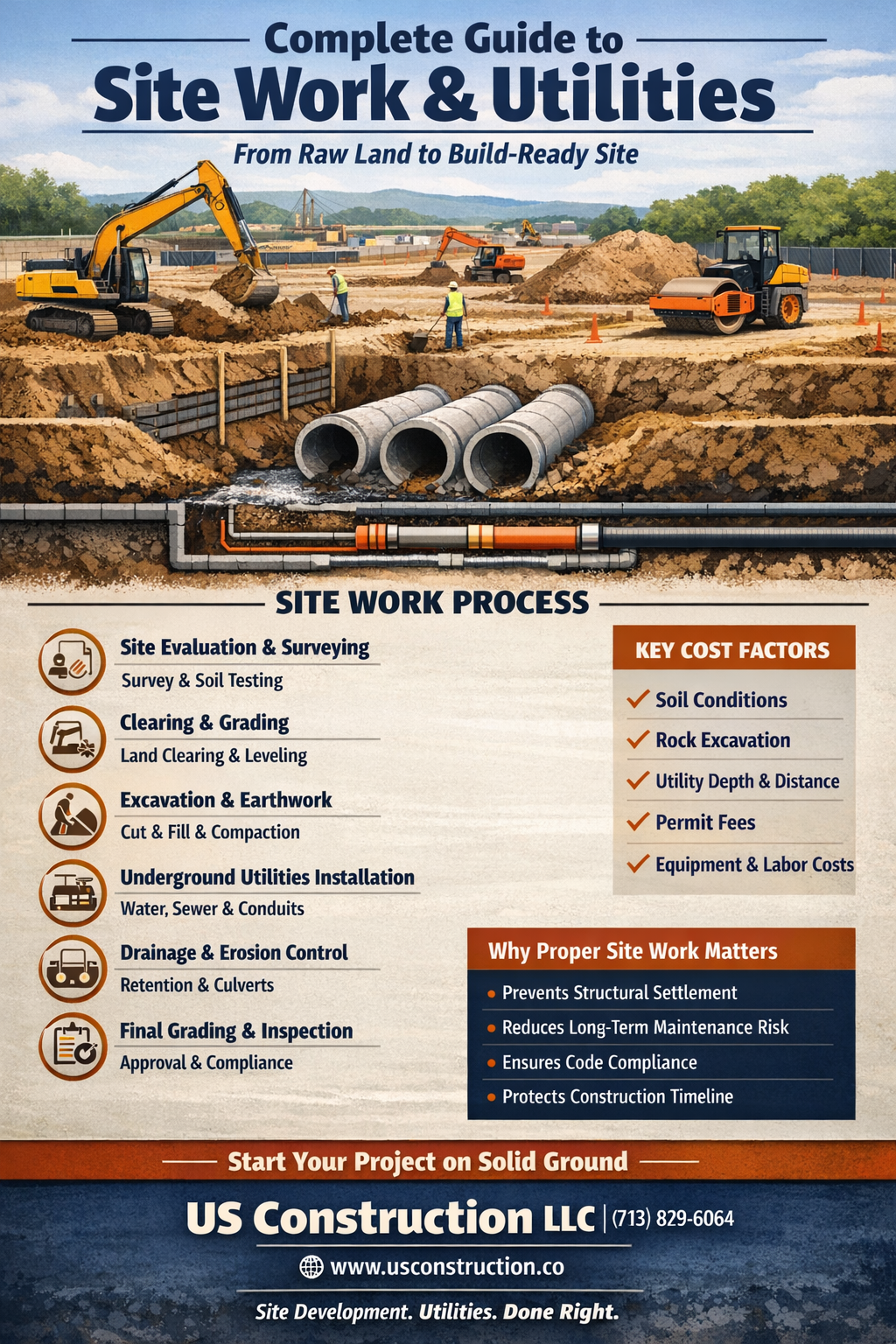
Site work and utility installations are the basic stage of construction that turn raw land into a structurally stable, code-compliant foundation. In this blog post, we explore a complete guide to site work and utilities for construction projects. The experts denoted site preparation as horizontal construction and building structure as vertical construction.
US Construction LLC conducts extensive excavation, grading, underground utility work, and drainage systems for long-term durability. Proper soil stabilization and compaction are essential for a solid, stable base for vertical construction. Inadequate site work leads to costly rework and structural vulnerabilities.
What is Site Work in Construction?
Site work is a series of activities like land clearance, earthwork, excavation, stabilization, drainage installation, and foundation development. The need for site work varies with geographical and soil conditions. In technical terms, site work addresses structural risks, regulatory compliance, and long-term asset performance.
Pre-Construction Planning Phase for Site Work
The pre-construction phase is crucial before site work to understand the local conditions, ensure geotechnical stability, and ensure legal compliance. Contractors conduct feasibility studies, cost modeling, and the permitting process.
Land Surveying and Topographical Analysis
Accurate surveying outlines the legal and physical parameters of the land. In boundary and ALTA surveys, developers establish property lines, easements, and encroachments for structural placement and leasing clearance. Elevation mapping provides a precise overview of land contours, existing utilities, and natural features. It supports finalizing grading, drainage system design, and ADA accessibility plans.
Geotechnical Investigation
Subsurface conditions determine design features and site preparation work. Geotechnical experts take soil samples at different depths to evaluate soil chemistry, moisture content, and the water table level.
Laboratory testing determines the soil’s load-bearing capacity, which helps select the foundation type (slab design and Pier depth). Moreover, the excavation depth and soil stabilization methods are finalized. Compaction percentages depend on building structural loads.
Environmental Assessments
Environmentally safe construction practices are essential for public safety and project viability. Before starting operations, contractors evaluate the existing conditions of natural resources. They also provide effective plans to reduce their environmental impacts.
Floodplain mapping indicates whether the project site lies within a flood zone. For vulnerable areas, elevated foundations, stormwater detention systems, and mitigatory plans are submitted. Builders follow the Environmental Protection Agency and the National Pollutant Discharge Elimination System (NPDES) guidelines.
Step-by-Step Site Work Process
The site development activities are fully regulated and follow a structured sequence. All phases are interlinked and strengthen one another. A professional planning and execution process delivers quality work that clarifies the authority inspections.
Clearing and Demolition
This initial phase removes vegetation, existing structure, and underground obstructions. A solid level surface is prepared using dozers, excavators, and dump trucks to dispose of waste. Houston general contractors need demolition permits and must handle debris safely. The previous utility pipeline should be accessed carefully, and proper removal of organic material is necessary to control long-term settlement issues.
Rough Grading
Rough grading reshapes the drainage slopes and building pad with accurate engineered elevations. The civil work plans emphasize soil moisture conditioning and the compatibility of land elevations with drainage systems. Site engineers are responsible for obtaining municipal grading inspection clearance. Accurate drainage slopes manage smooth stormwater flows and prevent ponding.
Utility Trenching
After site grading and stabilization are complete, underground utilities are installed. Developers install:
- Water supply lines
- Sanitary sewage pipes
- Stormwater detention ponds
- Electrical conduits
- Gas and internet cabling
Trench depth and slope are outlined with existing utility supplies. To control leakage, proper pipe alignment and joint sealing are required. An effective distance between pipes, filled with bedding material, is essential.
Storm Drain Installation
Civil engineering plans include detailed documentation of catch basin placement, underground piping systems, and retention pond construction. Reliable techniques are applied to structure outfall prevention.
Pipeline placements follow gravity flow, inlet elevation alignment, and joint integrity testing to ensure smooth flow and erosion control. Storm drainage failures can lead to municipal penalties.
Fine Grading and Compaction
Fine grading is essential after final land elevations are established. A smooth foundation pad and paving work begin. Final elevation survey verification includes density and moisture content testing. Third-party inspection prepares geotechnical compaction reports.
Subgrade Preparation
Subgrade preparation after soil bed compaction is stabilized with lime or cement to provide stable foundations and pavement. Final compaction certification is achieved for a strong, legally compliant structural base.
Each phase includes sequencing, documentation, and regulatory inspections to reduce risk factors and foundation settlement failures.
Complete Guide to Construction Utilities Installation
Underground utility installation is a technically sensitive process. It includes proper design, depth, slope, and testing controls for a stable and compliant installation. Houston commercial contractors coordinate with civil engineers, inspectors, and utility providers for long-lasting value.
Water Supply Systems
Water infrastructure is designed to meet local hydraulic demand and municipal specifications.
| Domestic Water |
|
| Fire Lines |
|
| Backflow Prevention |
|
Sanitary Sewer Systems
Sanitary infrastructure installations should safely and efficiently remove wastewater.
| Gravity Sewer | Installed at a specific elevation for gravity-based wastewater flow. |
| Force Main | Pumps are used where gravity flow is not feasible. |
| Maintenance holes |
|
Stormwater Drainage
In Houston, Texas, contractors need effective stormwater systems to manage excessive rainfall and flooding concerns.
| Detention Ponds | Retention ponds store water permanently, while detention ponds release it gradually to the maintenance hole. |
| Underground Storm Systems |
|
| Erosion Control Measures |
|
Electrical and Power Infrastructure
Electrical installations require collaboration with the local power provider and must follow their guidelines.
| Primary Service | First, developers connect a high-voltage supply from the utility provider to the transformer. |
| Secondary Service | Lower-voltage connections for the building from the transformer. |
| Transformer Pads |
|
| Conduit Installation |
|
Gas Lines
Gas connections for residential or commercial constructions require strict adherence to safety codes.
| Pressure Testing | Verify leakage and air-pressure testing conducted by third-party inspectors. |
| Safety Regulations | Suitable burial depth and tracer wire installation by collaborating with the utility provider. |
Telecommunications and Data
Modern business-related developments require high-power digital infrastructure.
| Fiber Optic Conduit | Dedicated conduit pathways with pull strings and vaults |
| Coordination with Providers |
|
Houston Commercial Contractor Near Me
Site work is the initial construction stage that prepares the land for subsequent operations. The building’s durability depends on extensive earthwork and land preparation. If you are planning large-scale commercial construction, contact US Construction LLC for a technically sound, successful build.
FAQs
Q 1. What is covered in site work?
Site work includes land clearance, grading, excavation, stabilization, and compaction. It covers all horizontal construction activities to make the land ready for the next activities. After site preparation, underground utility installations start.
Q 2. What is the depth of underground utilities installed?
Utility depth trenching based on project type, frost line requirements, and local regulatory codes:
- Water lines: 3–6 feet deep
- Sanitary sewer: Installed at a specific gradient and slope to control backflow.
- Storm drains: Depth is different for custom hydraulic design
- Electrical conduit: 24–36 inches minimum range
- Gas lines: 18–36 inches
Q 3. Who is responsible for utility installation in construction projects?
Underground utilities’ installation requires certified professionals and collaboration with local utility providers. Houston commercial contractors coordinate with civil engineers and utility providers for exact specifications and third-party audit clearance.
Q 4. What is the cost for site preparation per acre?
Site preparation costs depend on soil conditions, proximity to main utilities, and regulatory compliance. The average cost is around $50,000 to $150,000+ per acre. However, the major contributors are:
- Earthwork needs
- Existing stormwater structures
- Lot distance from main utility supply
- Permit and inspection fees
Leave A Comment